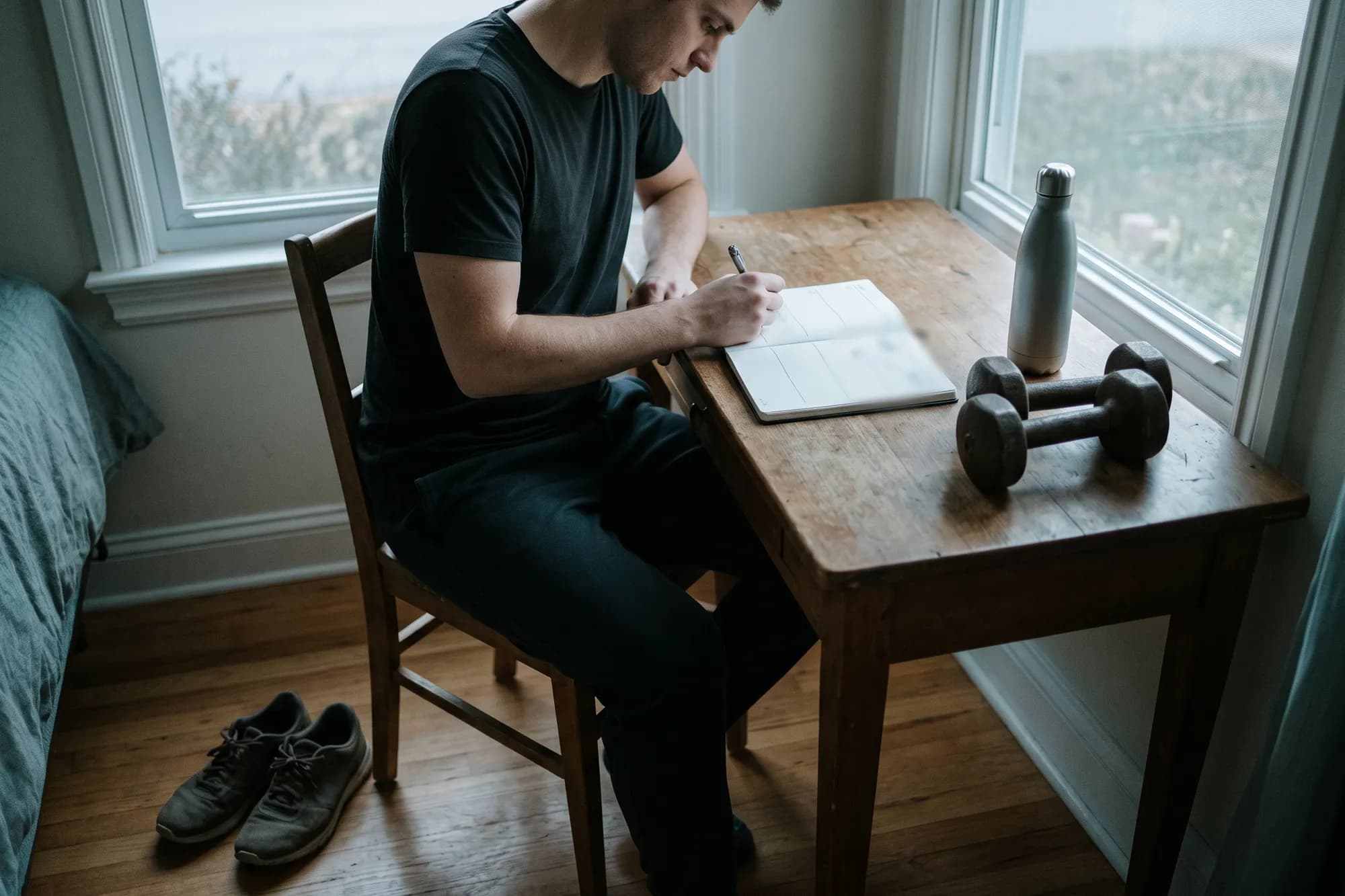
How do I choose how many days to work out?
Start with your calendar, not with a number you read somewhere. Look at the next four weeks and count the days you can protect for training: days when work, family and travel won't get in the way. Pick that number, or one fewer if you're unsure.
The reason is simple. A plan only works if you do it. Three workouts you keep every week will take you further than five you start and drop by the second week. You can always add a day later, once the first few weeks feel easy to fit in.
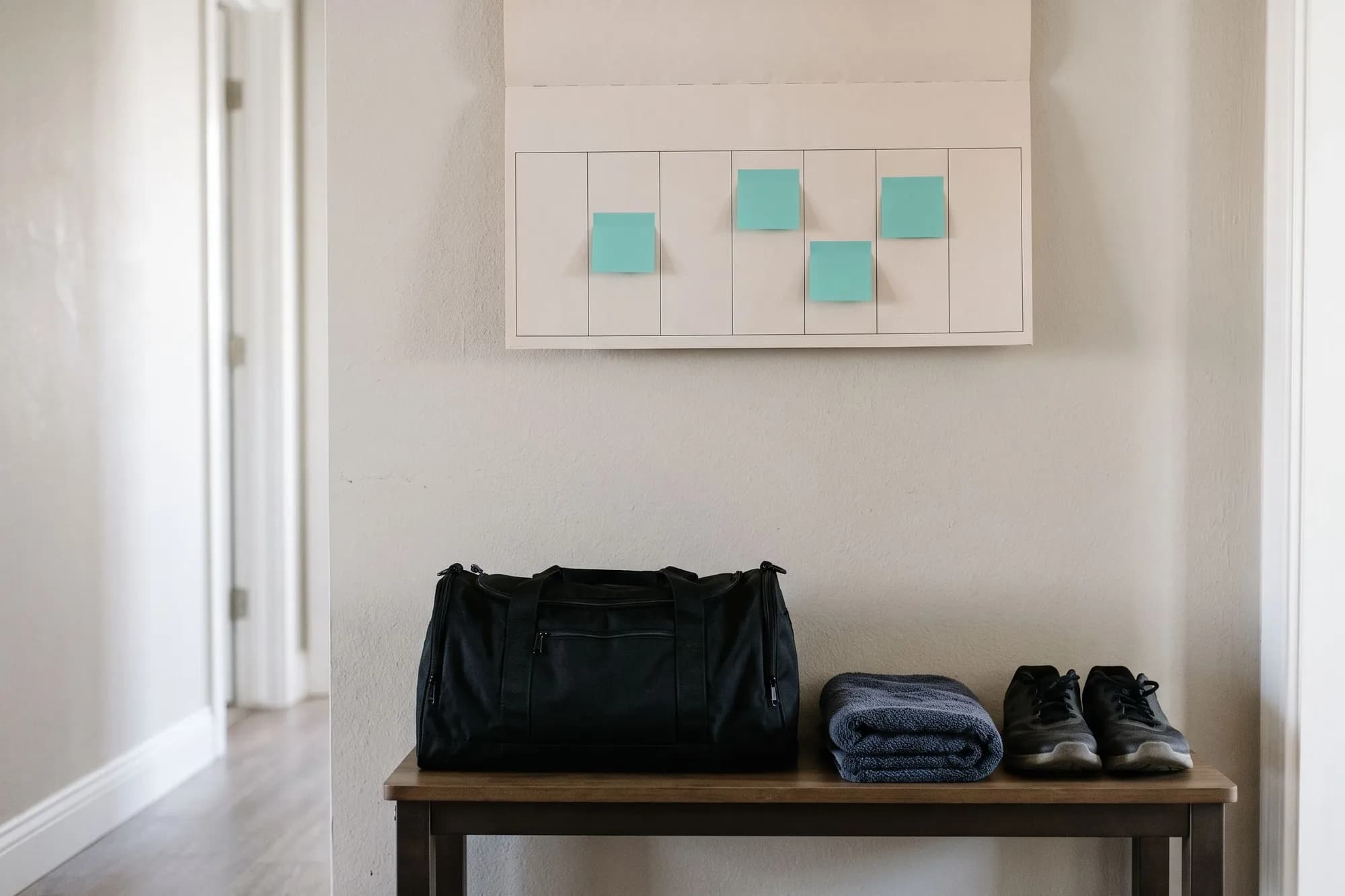
Choose your session length at the same time. Days and minutes trade off against each other: two 60-minute sessions and three 40-minute sessions both add up to two hours a week, but they feel very different to plan around. Pick the mix that fits the way your week really runs.
What does a week look like with 2, 3, 4 or 5 days?
The number of days decides how each workout is split up. With fewer days, each session trains your whole body. With more days, each session can focus on part of it. This is how HybFit splits a week:
- 2 days: full body A and B. Each session trains legs, a push and a pull. With two or three days between them, for example Monday and Thursday, you train your whole body twice a week.
- 3 days: full body A, B and C. Three different full body sessions with a rest day between each, for example Monday, Wednesday and Friday.
- 4 days: upper and lower. Upper A, Lower A, Upper B and Lower B. Each session covers half the body, so each one has room for more work on those muscles.
- 5 days: upper, lower, push, pull and legs. An upper and a lower day, then three days that each train one part of the body.
Here are three of those weeks, built by HybFit's training rules for its free plan pages:
2 daysFull body A, Full body B
- Monday: Full body A, about 44 minutes
- Tuesday: rest
- Wednesday: rest
- Thursday: Full body B, about 44 minutes
- Friday: rest
- Saturday: rest
- Sunday: rest
3 daysFull body A, Full body B, Full body C
- Monday: Full body A, about 39 minutes
- Tuesday: rest
- Wednesday: Full body B, about 39 minutes
- Thursday: rest
- Friday: Full body C, about 34 minutes
- Saturday: rest
- Sunday: rest
4 daysUpper A, Lower A, Upper B, Lower B
- Monday: Upper A, about 50 minutes
- Tuesday: Lower A, about 47 minutes
- Wednesday: rest
- Thursday: Upper B, about 52 minutes
- Friday: Lower B, about 44 minutes
- Saturday: rest
- Sunday: rest
Is working out more days a week always better?
No. More days only help if you can keep them and recover between them. Adding days either spreads the same work across more sessions or adds more work in total. Both can be useful, but only once your current week feels manageable.
A good sign you're ready for another day: you've done every session for a few weeks in a row, you start each one feeling ready, and you have a free day you'd like to use. A sign you've picked too many: you keep moving or skipping the same session. In that case, drop a day. That's not a step back. It's a plan that fits.
Does my goal change how many days I should train?
It changes the details more than the answer. Your schedule still comes first.
- General fitness: 2 or 3 full body days cover every main movement each week.
- Building muscle: 3 or 4 days give each muscle more sets across the week. An upper and lower split on 4 days is a common way to do it.
- Getting stronger: 3 full body days give the main lifts, like the squat and the deadlift, regular practice with enough rest between sessions.
- Strength and running: strength days plus runs on other days. HybFit keeps heavy leg sessions off the day before a hard run, so your legs are fresher for it.
If you're new to training, or coming back after a break, 2 or 3 days is a good place to start whatever your goal.
How should I space my training days?
Leave a day between full body sessions where you can. Monday, Wednesday and Friday is the classic 3-day week for that reason: every workout is followed by a day off.
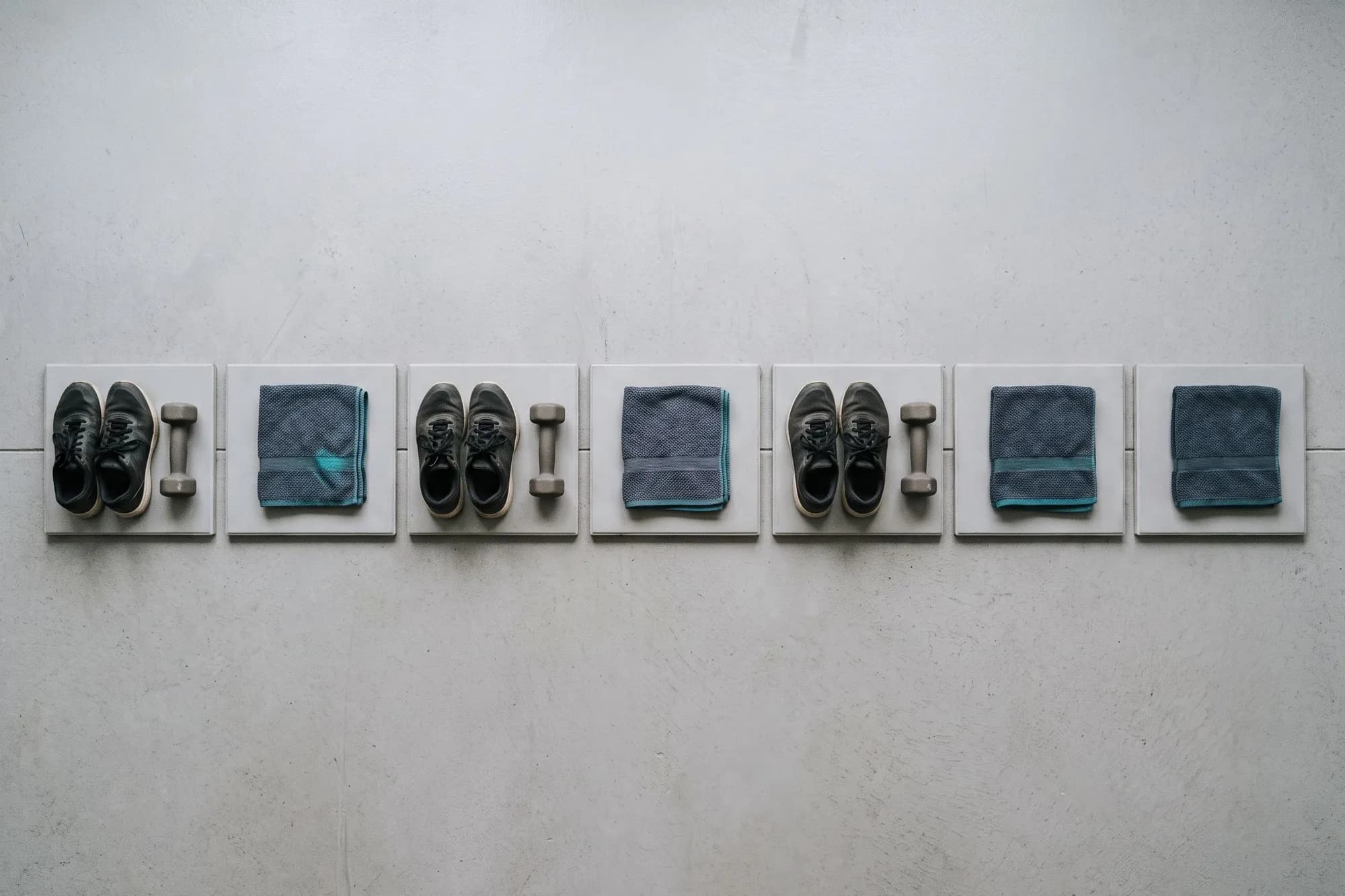
With 4 or more days, some sessions will fall on back-to-back days. That's fine when they train different muscles. An upper body day followed by a lower body day gives each half of the body time to recover while the other half works.
HybFit plans around this. When it places your workouts on the days you said you're free, it avoids back-to-back sessions where it can, and when two have to sit next to each other, it puts sessions there that share the fewest muscles.
How long should each workout be?
Long enough to do the main work, short enough to fit your day. Common choices are 30, 45 or 60 minutes. Fewer days can mean longer sessions, and more days can mean shorter ones.

In a HybFit plan, every session fits the minutes you choose, an 8-minute warm-up included. When time is short, the main exercises stay and the smaller extras go first.
How does HybFit plan your training days?
You answer seven questions, including which days you can train and how long you have. HybFit's training rules then pick the split for that number of days, place the workouts on your days and fit each one to your session length. Same answers, same plan, every time.
Each plan runs in blocks of 4 weeks. The main lifts get an extra set in week 3, and week 4 is a lighter recovery week with fewer sets and easier effort. If your week changes, change your answers and HybFit builds the plan around your new days.
Want to see it with your own days? Build your own plan in a few minutes, before you create an account. Or start from one of the free training plans.
Questions
- Is working out 3 days a week enough?
- For many people, yes. Three full body sessions train every main movement each time, with a rest day in between. It's a common place to start and a schedule that's easy to keep.
- Is it OK to work out 2 days a week?
- Yes. Two full body sessions a week, with two or three days between them, still train your whole body twice. It's a good choice when your week is full, and you can add a day later.
- Should I work out on back-to-back days?
- You can, as long as the two sessions train different muscles, like an upper body day followed by a lower body day. With full body sessions, a rest day between them works better.
- Do rest days count as part of the plan?
- Yes. The days off are when you recover from the work. A plan with 3 workouts and 4 rest days is still a full week of training.
- What if I miss a day?
- Do the next workout on your next free day and carry on from there. One missed session doesn't undo a week. If you keep missing the same day, change your plan to fewer days.
Build your plan
Tell HybFit your days, session length and equipment. Seven quick questions, and you see your plan before you create an account.
Build my plan